
Sun, Soil & Sovereignty: An Agrivoltaics Tour with SHEBA Farm - PNW Climate Week 2026
Happy PNW Climate Week! Wy’East RC&D was proud to be a part of two events, out of the countless events that are occurring across the PNW.
Pacific Northwest Climate Week, held from July 13-19, 2026, is “the first cross-region climate week in North America. Join us for a week of events that spotlight home-grown climate solutions and accelerate action.”- PNW Climate Week. The week’s events spanned 7 cities, leveraged 220 individual events, and reached all the way from Bend, Oregon to Vancouver, British Columbia.
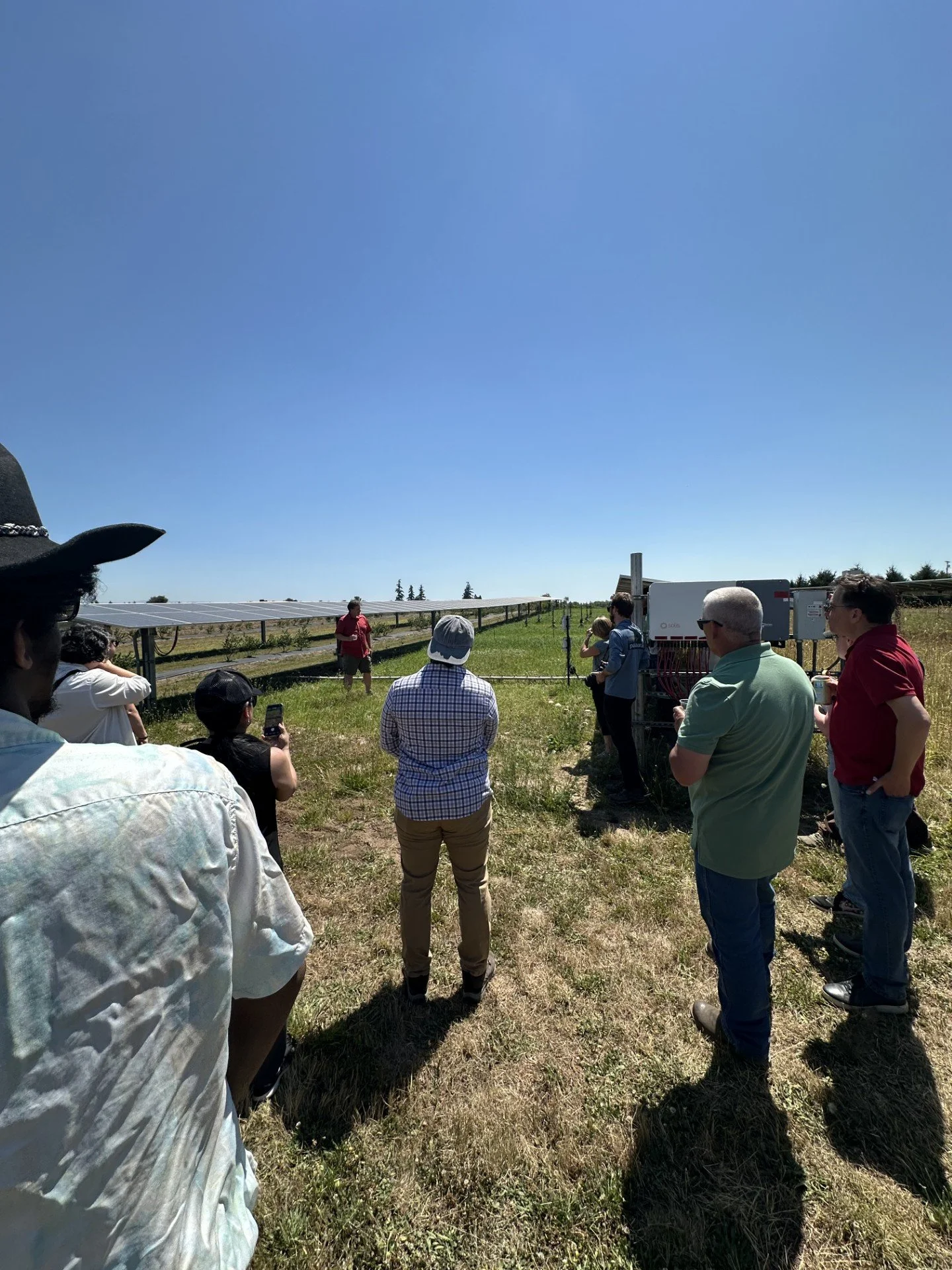
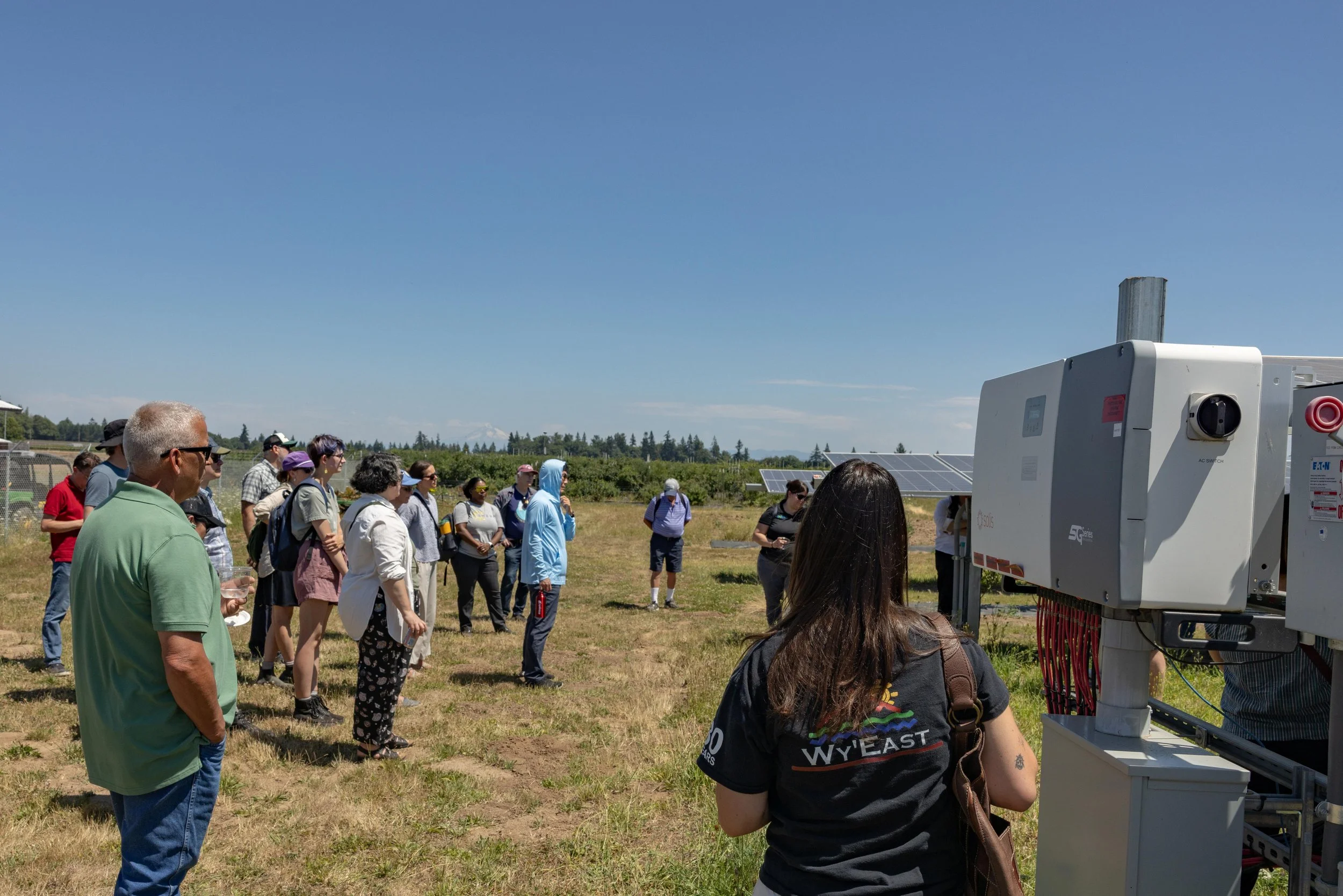
Wy’East attended the Sun, Soil & Sovereignty: An Agrivoltaics Tour with SHEBA Farm in Aurora, OR on July 14, 2026 at the Oregon State University North Willamette Research and Extension Center.
Let’s start by defining agrivoltaics. American Farmland Trust defines agrivoltaics as “a ground-mounted photovoltaic solar energy system that has been intentionally planned and designed with agricultural producers or experts and is constructed and operated to achieve integrated and simultaneous production of both solar energy and marketable agricultural products—including crop production, grazing, and animal husbandry—on the land beneath and/or between rows of solar panels…”
Dr. Chad Higgins, Associate Professor at OSU, was the primary speaker on this tour. Dr. Higgins shared lots of findings, roadblocks, details, and facts relating to solar, agriculture, crops, and how this unique project came to be. The OSU North Willamette Research Center is roughly 160 acres, and 20 acres of this are dedicated to this agrivoltaics array in partnership with SHEBA Farm. SHEBA “empowers rural and underrepresented communities through Agrivoltaics, Vertical Farming, and STEM Education to promote sustainability, environmental justice, and self-sufficiency.”
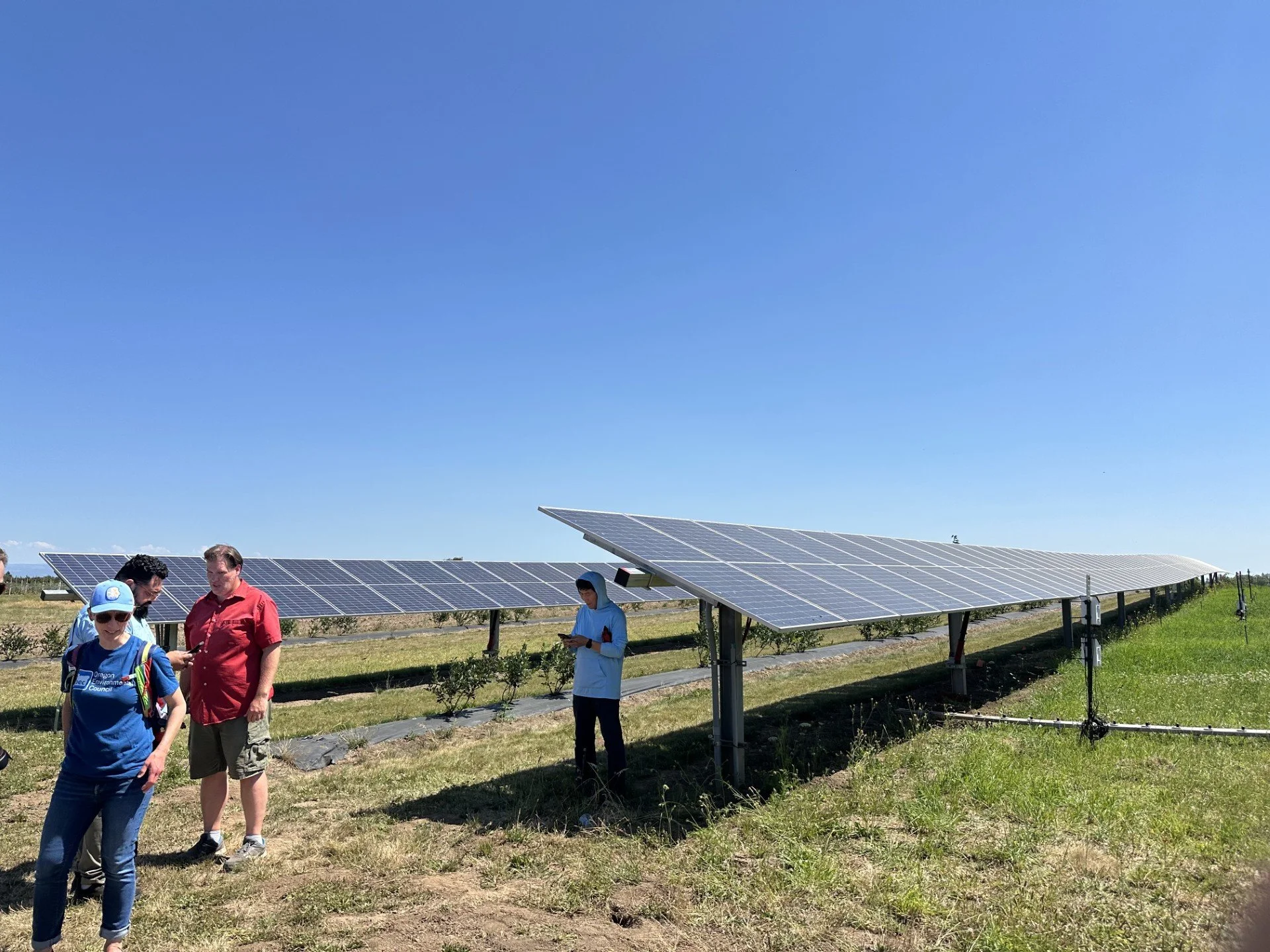
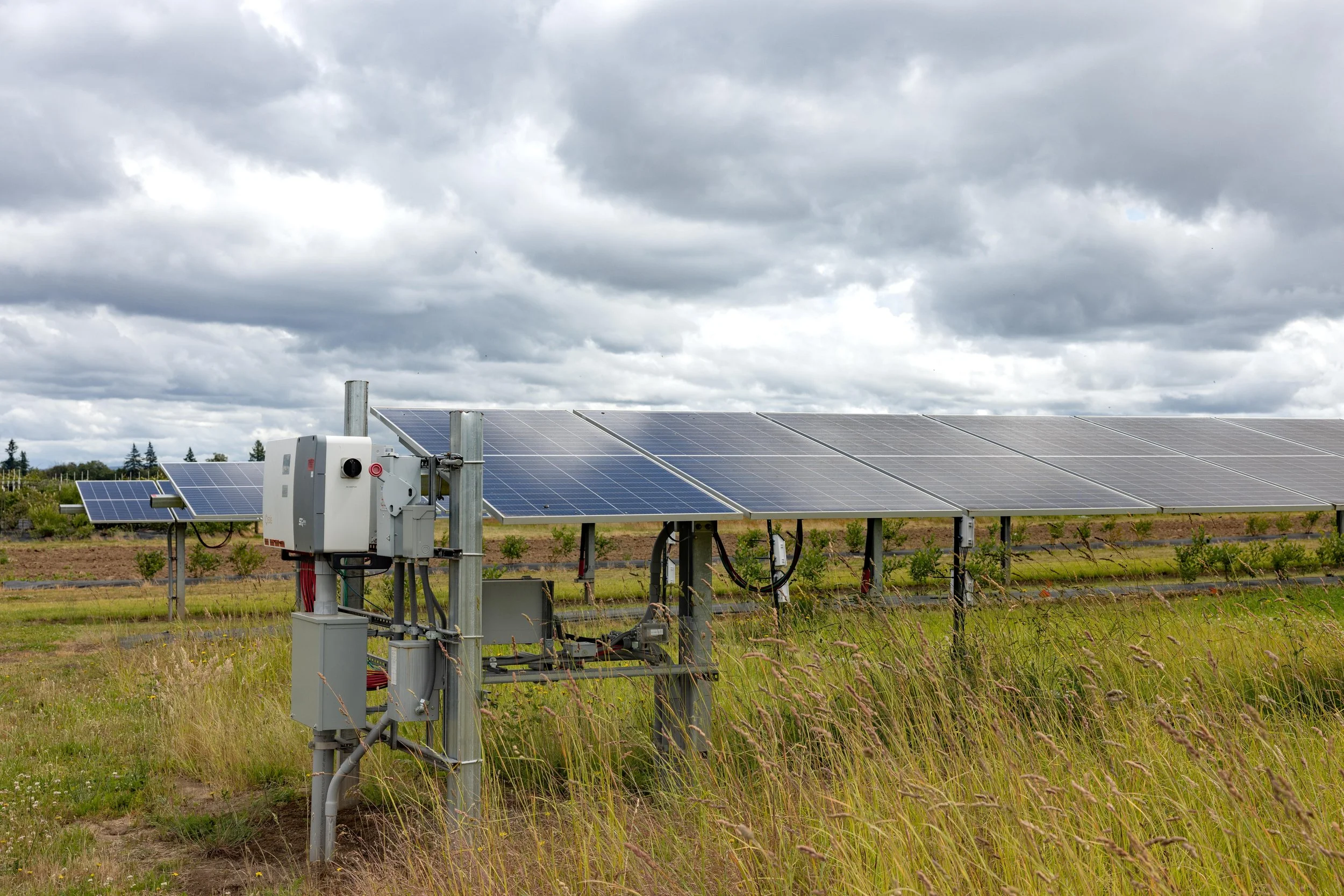
This array is about 320kW in size and is on 20 acres of land.
Under the array, blueberries are being grown in one area and grass in another. The goal of this specific array is not to grow crops, this is because the project is funded through research grants, meaning the array cannot generate a profit.
To learn more about this agrivoltaic system and how it came to fruition read this article written by Sean Nealon - Oregon State University.
This project is measuring various circumstances and aspects of the land and resources. For example, the sunlight hitting the ground between the arrays is being measured constantly; every 15cm there is a device placed and capturing this data. Also, they are measuring the water availability and the differences in the crops that are getting full sun, part sun, and shade.
The solar panels on this array are bi-facial. This means that these panels catch the refracted light coming from below, or under the panels. The panels also allow a small amount of light to pass through them. The way this array was built also resulted in virtually no ground disturbance. The steel posts holding up the panels can follow the terrain. Lastly, this agrivoltaics array is also what’s called a tracking system. This means that the solar panels tilt in unison with the sun throughout the day to maximize the amount of sunlight they are able to collect and utilize for energy production.