
In Conversation with OPB: Northwest Energy Event
On January 29, 2026 Wy’East RC&D attended the “In Conservation with OPB: Northwest Energy” event hosted by OPB and sponsored by Ecotrust and ProPublica. The event had two panels, which covered a variety of pathways that Oregon could take to become one step closer to meeting the “Oregon Energy Strategy” plan, which was published in November 2025 by the Oregon Department of Energy. The panels also covered roadblocks, and the panelists were able to share their experiences with the difficulties that come with implementing renewable energy systems in Oregon.
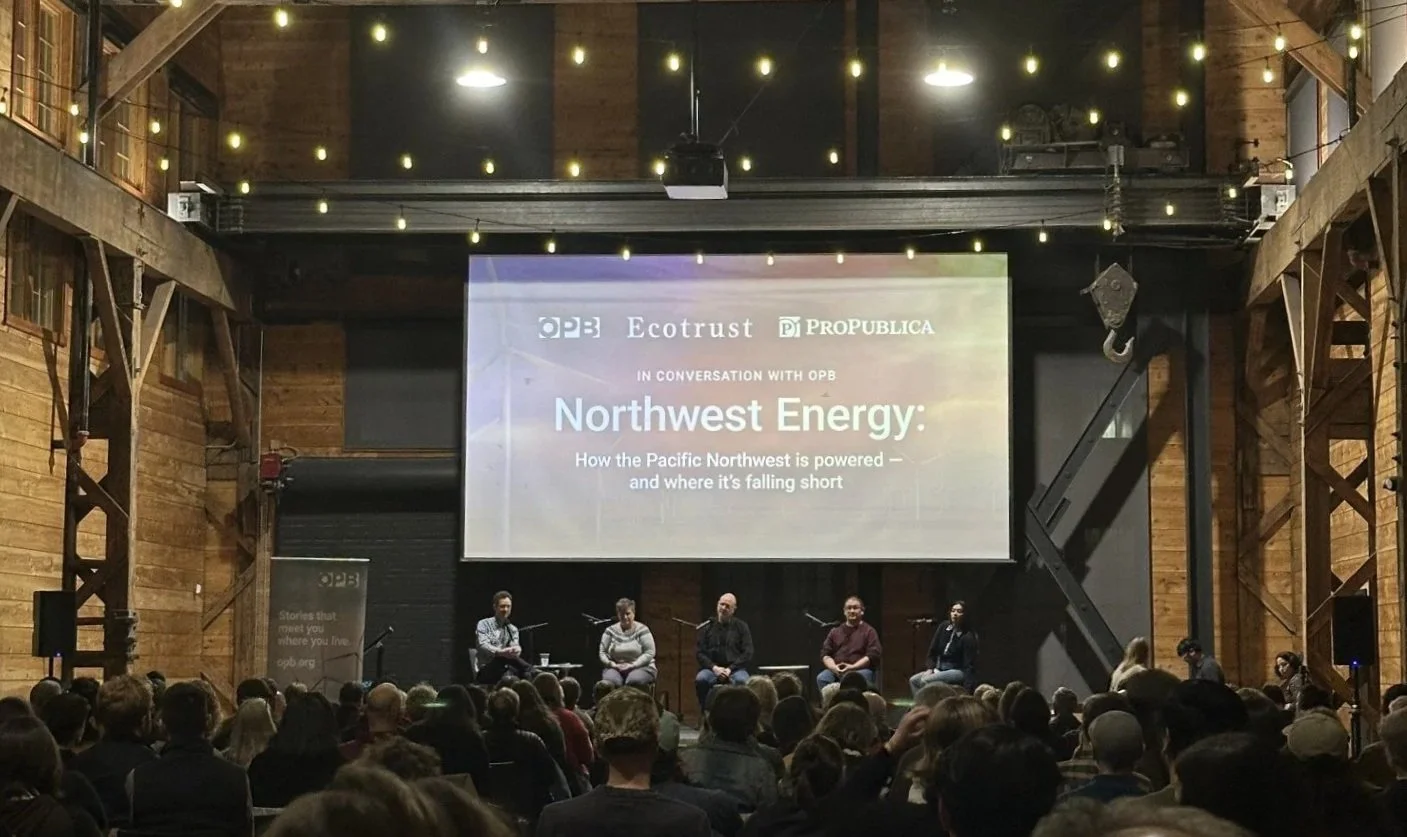
This event was held at The Redd, an event space in the SE Industrial District of Portland, OR.
Panel 1:
Emily Moore – Senior Director of Sightline’s Climate and Energy Program
David Brown – Founder and Senior Principal, Obsidian Renewables
Tony Schick – OPB Investigative Editor and Reporter
Monica Samayoa – OPB Climate and Environmental Journalist
Moderator: Geoff Norcross – Host of OPB’s “All Things Considered”
This panel focused on Oregon’s past and current struggles with moving towards renewable energy sources. Oregon is falling behind in the renewable energy space, one panelist noted that Oregon is the 42nd worst state in becoming net-zero. Oregon has a high electricity demand due to public electrification and numerous data centers around the state. Also, Oregon has old wires, wires that connect transmission lines and the grid to our businesses and homes. A panelist noted that if these wires were upgraded it could double the energy capacity.
There were also a lot of comparisons made between Oregon and Texas. Texas is doing much more in the renewable energy space. It is much easier to get private projects done in Texas than it is in Oregon. Some of the reasons for this include excessive red tape, a lack of procurement requirements in the Oregon Energy Strategy plan, pushback from rural Oregon residents who feel like they are getting left out of the benefits of renewable energy, and the difficulties that some have dealt with while working with the Bonneville Power Administration (BPA).
Panel 2:
Jason Busch – Executive Director, Pacific Ocean Energy Trust
Monica Samayoa – OPB Climate and Environmental Journalist
Jes Burns – Science Reporter for OPB's Science & Environment Unit and Producer of “All Science, No Fiction.”
Antonio Sierra – OPB Rural Communities Reporter, Eastern Oregon
Moderator: Aaron Scott – Executive Editor of OPB’s Science and Environment team and Executive Producer of “Oregon Field Guide” and “All Science. No Fiction.”
The second panel focused on both the current and future of Oregon’s potential renewable energy projects. The panel began with a short video taken in Central Oregon showing the geothermal energy process with Mazama Energy working on a project in Sunriver, OR. In Southern Oregon geothermal energy is already being utilized in Lake County and Klamath County, where they have been using it to power public infrastructure for over a decade.
In Corvallis, Oregon State University has four different developers off the Oregon coast to test ocean wave energy equipment. One of these developers is PacWave. There is lots of energy potential in the ocean wave energy sector, but we have yet to connect this energy to the grid.
There were discussions of nuclear energy, although in Oregon we cannot construct a nuclear power plant until there is a nuclear waste depository site in place as well. This is because of a law passed in 1980, Ballot Measure 7. There is some demand for nuclear energy in Morrow County and Umatilla County, where there is a hub of Amazon data centers. Instead, Amazon is looking to construct a nuclear power plant right across the Columbia River in Washington, and they could then transport the nuclear energy to their data center hub. Lastly, an alternative to the large-scale nuclear power plant was brought up as well. This smaller-scale version of nuclear energy comes from small modular reactors (SMRs). SMRs are scalable to better-match lower demands and are also believed to be safer, although there has been little testing done in the United States.
This fast-paced event covered a wide variety of renewable energy systems, their pros, cons, and roadblocks that come with implementing them. It was very interesting to hear from people with different backgrounds about their experiences with trying to help Oregon be one step closer to becoming net-zero. Thank you to OPB and the sponsors for hosting this event.